
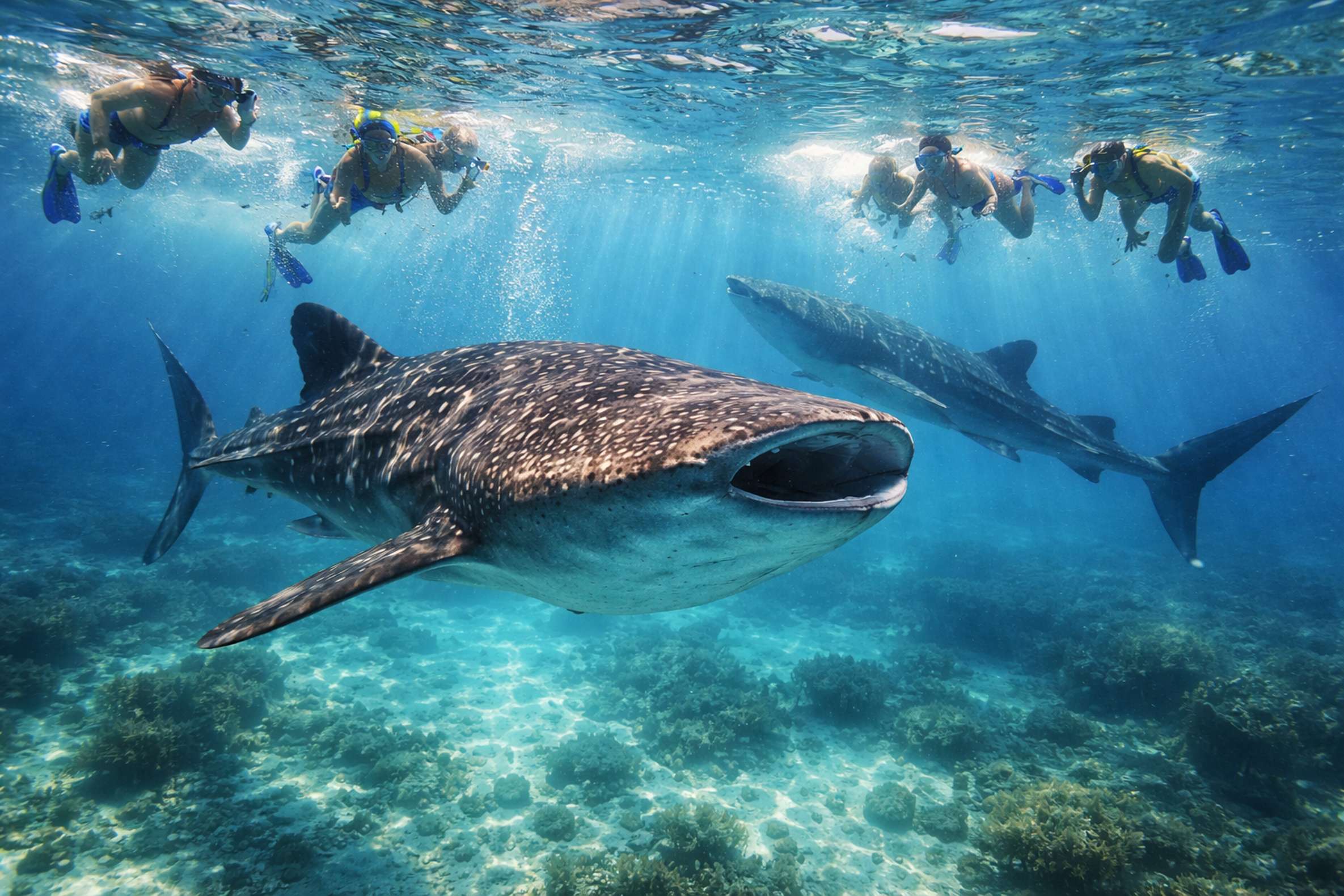
Best Time to See the Sardine Run in Moalboal - Season, Months and Time of Day
Time your swim right and the bait ball is yours. The sardines stay off Panagsama Beach all year, so pick the clearest months, enter at 6 am and snorkel the school with turtles, before the crowds arrive. Join a day tour that gets you there early, gear and guides included.
"Marlon was an excellent driver and the package exceeded my expectations. The whale shark, Tumalog and Moalboal sardines tour made my trip one to remember. Highly recommend!"
The best time to see the sardine run in Moalboal
waves stay under 1.5 m every month of the year
The sardines never leave Panagsama Beach, but the water is clearer in some months than others and the reef empties before 7 am. The months, the hours and the grey-day plan all sit below.
- 1
The sardines live off Panagsama Beach year-round, so any month you can book still carries the encounter.
- 2
November to May brings the clearest water, with January to April the peak window.
- 3
Get in the water between 6:00 and 9 am, or hold out for 3:00 to 5 pm.
- 4
Since August 2025, an accredited local guide is required, and the environmental fee is cash only.
- 5
Two full days is the minimum stay; three to four buys you a buffer against bad weather.
Build a buffer day into your itinerary so a stormy morning does not cost you the sardine run, and book tours with free cancellation so you can reschedule at no cost if the sea closes for the day.
Do the sardines ever leave Moalboal?
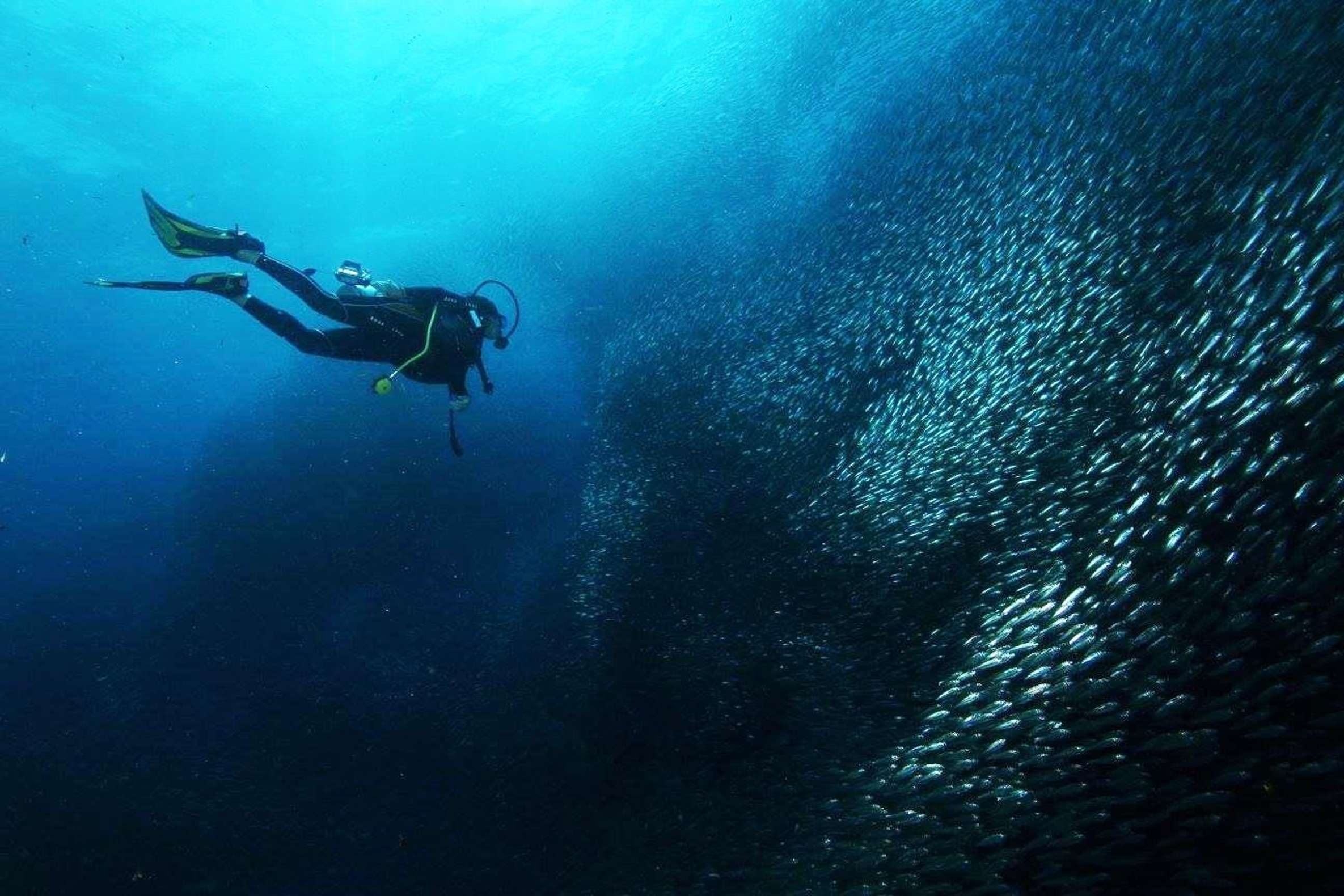
The bait ball hangs over the reef a few fin kicks from Panagsama Beach, and it does so in January as much as in June. Unlike South Africa's famous migration, Moalboal's sardines are residents. The school stays year-round, so the month you book does little to decide whether the fish are there.
Wildlife still keeps its own schedule. The sardines temporarily vanished once before, after fishermen netted them, and they have shifted locations since.
Most visitors report seeing them on any given day, including travelers who arrived in December and January, yet the school can thin or move, so treat a sighting as very likely rather than promised.
The millions of sardines live on the Panagsama reef all year; there is no season when they are simply absent.
The school has moved between Pescador and Panagsama over the years, and it now sits right off Panagsama Beach.
Wildlife does not perform on schedule; the sardines are there nearly every day, but every visit carries some risk.
What weather does control is the rest of your day. Heavy rain can cancel boat trips and make conditions less pleasant, and if an organized tour is canceled you can reschedule or take a full refund.
Which month gives the clearest water?
December versus July is the choice most itineraries come down to. The dry season runs from November to May, and that is when Panagsama's water is at its clearest, with January to April the peak and March and April especially praised.
Runoff from rain is what clouds the reef, so the wetter months trade clarity for green landscapes and quieter rooms.
The sea itself barely changes. Waves at Panagsama stayed under 1.5 m on every measured day across the year, and average conditions are calm through July to October too. The Habagat monsoon from June to October makes the water murkier after downpours, and the waves stay small all the same.
January is one of the busiest tour months and averages 28.4 rainy days, outside the July to October typhoon peak.
Tap a month to read it.
December averages 30.2 rainy days, and direct-hit risk in Central Visayas is identified as highest in November and December.
Tap a month to read it.
September is a quiet tour month within the typhoon-season peak and averages 18.8 rainy days.
Tap a month to read it.
So a July trip can absolutely work, as long as you accept an overcast morning now and then and the chance that unsafe weather pauses a water activity.
October is the month to be most flexible about, since rain lands on many more days than in the months either side. The water stays warm all year regardless, at its coolest around 27°C in February and its warmest near 30°C from June to October.
What time of day should you get in the water?
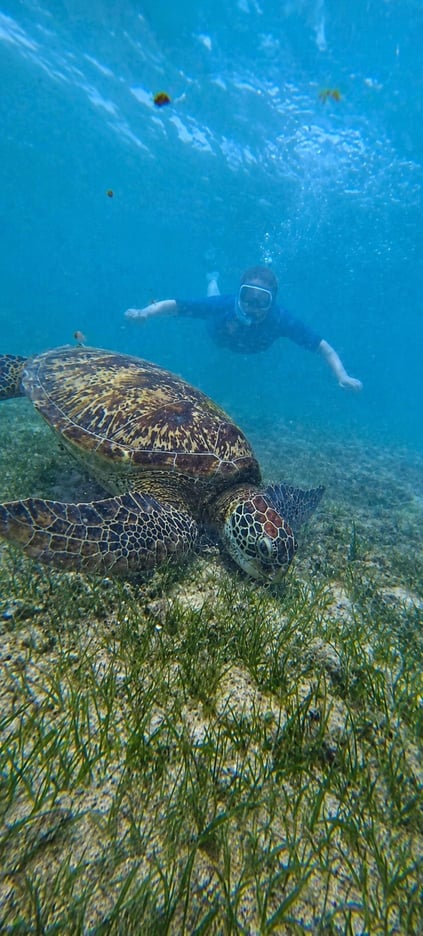
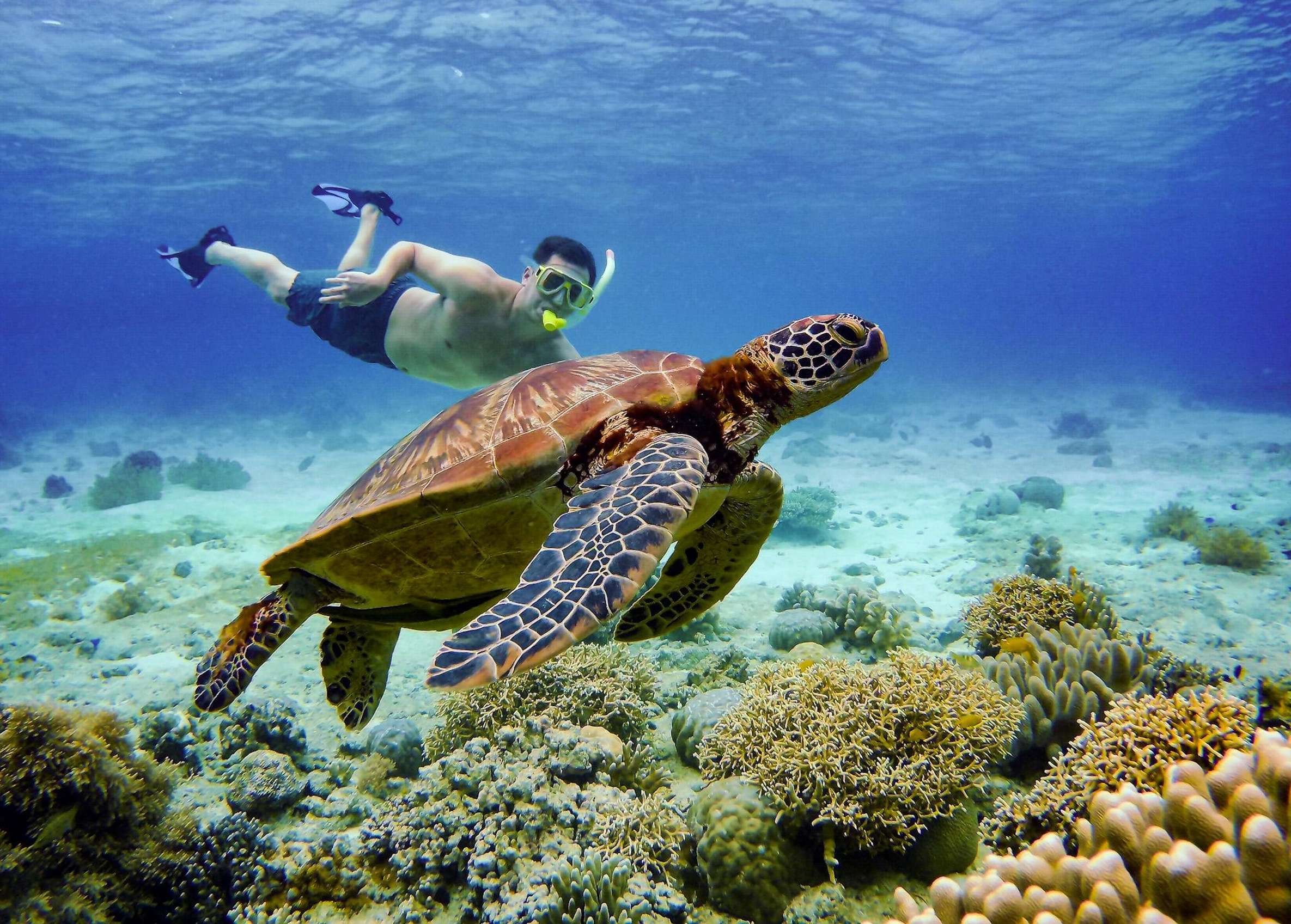
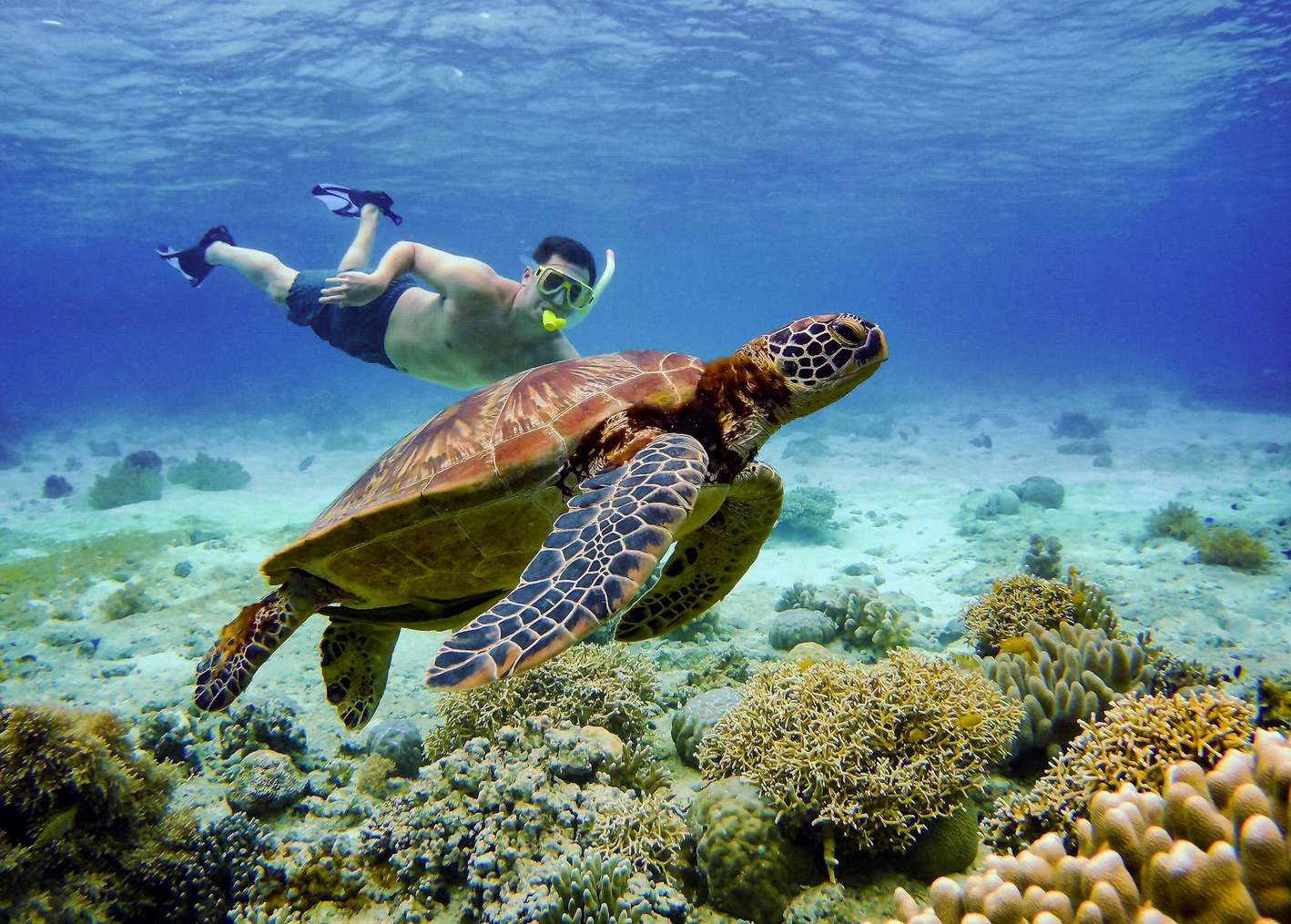
Dawn is when the reef belongs to you. Between 6:00 and 9 am the sardines swim active and near the surface, the water sits calmest, and the tour groups have not yet arrived. Turtles feed along the same shallow shelf in those hours, so the morning window covers both animals at once.
Midday is the hour to skip. The sun sits high, the light goes flat, the tour boats are out in numbers, and the turtles are least likely to be feeding.
If mornings are impossible for you, late afternoon from 3:00 to 5 pm is the honest backup: quieter than the morning rush, and the hour when predatory fish hunt the edges of the school.
Tour groups and snorkelers build through the morning.
Early morning and mid-afternoon carry a fraction of the traffic that builds from 8 am onward, and the calm water at both ends of the day makes getting in and out over the reef easier too.
Photographers get a second reason to pick the edges of the day, which the chapter on cameras covers in full.
How do you dodge the crowds and the boats?
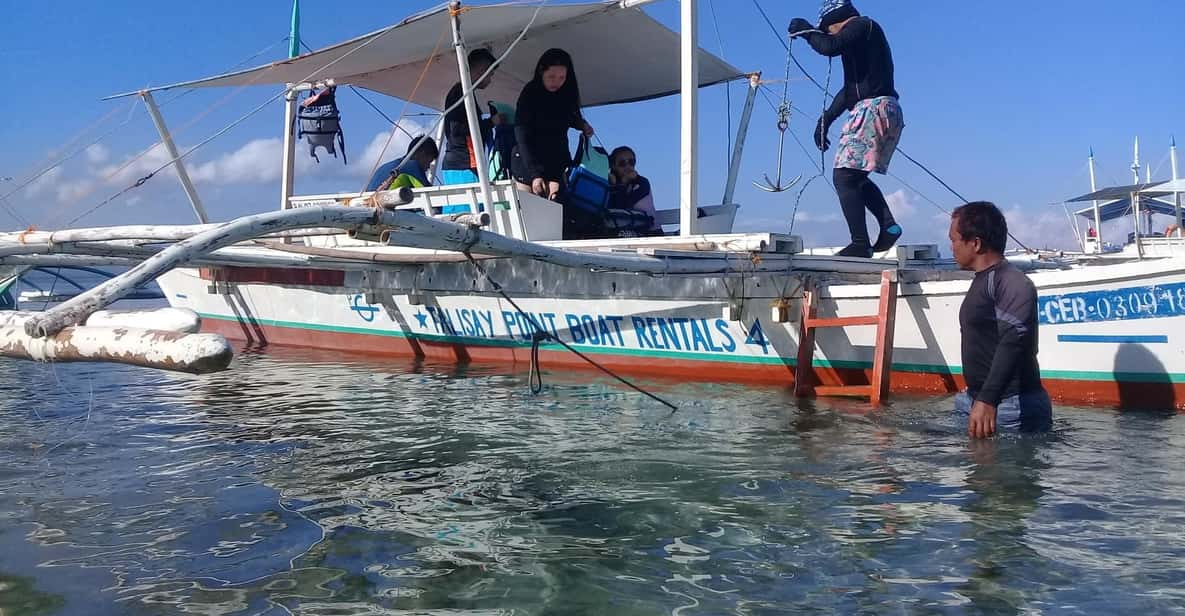
The day-trip vans set your schedule more than the tide does. They leave Cebu City between 2:00 and 4 am for the roughly three-hour drive south, which puts the first groups on the reef by mid-morning.
One visitor found the drop-off nearly empty at 6:30 am, with crowds building by 7:45 am. That is the whole race in one sentence.
Getting in the water by 7 am wins it. The school sits close to shore, so the swim from the beach takes only minutes, and you can be among the sardines before the first van door slides open.
The other play is the opposite: hold out until 3:00 to 4 pm, when the morning groups have gone and the light turns warm.
Expect boats either way. Panagsama has many of them, and they pass through the snorkeling area, so keep your head up at the surface.
Once in, plan on 45 minutes to an hour in the water, enough to circle the bait ball and find a turtle on the way back. Regulars describe the water as warm and clear, with more fellow tourists than the photos suggest.
When does weather actually cancel the sardine run?
Rough weather stops the boats before it stops the sardines. When the sea turns unstable, trips out to Pescador Island get suspended, but shore snorkeling at Panagsama has stayed open through exactly that kind of day, because the school sits a short swim from the beach.
The riskiest stretch for a ruined ocean day runs through the typhoon windows. June to October is the Philippines' broad typhoon season, and November and December carry the highest risk of direct hits in Central Visayas, so both windows deserve a buffer day in your itinerary.
A buffer costs you an afternoon in Cebu; a storm without one can cost you the sardines altogether.
If the weather turns
| If this happens | What happens then |
|---|---|
| Boat trips to Pescador Island get suspended | Shore snorkeling at Panagsama may continue, since the sardines are reached from the beach. |
| An organized tour is canceled for unsafe seas | You choose a rescheduled date or a full refund under the tour's terms. |
| Heavy rain sits over southwestern Cebu | Conditions underwater become less favorable, so plan the sardine swim for the clearest day of your stay. |
A grey forecast still leaves the beach entry, so check what runs from shore before you give the day up.
Can you just walk in from the beach?
No boat, no booking, no waiting. The sardines hold along the reef directly off Panagsama Beach, and one swimmer reported being among them within about 10 meters of the shore. The drop-off, where the reef shelves away and the school gathers, sits roughly 50 meters from the high-tide line.
The tide decides how graceful your entry looks. At high water you slip over the reef easily; at low tide the water recedes enough to walk across the shallow reef flat toward the drop-off, picking your way over rock as you go. Either way it takes a few minutes.
What nobody tells you
You swim out from the beach itself, so no boat hire is needed and you can go whenever conditions suit.
Municipal rules make the vest mandatory for snorkeling, which quietly helps anyone who swims weakly.
That one-to-two ratio is why guided help feels personal, even for nervous swimmers.
The rule protects the snorkel area, though boats still pass through it, so stay alert at the surface.
Non-swimmers see the bait ball too, floating on the surface in a vest with a guide alongside, and the school gathers close enough for an easy retreat. Turtles feed on the same shallow shelf, so one swim usually covers both.
What are the rules, fees and paperwork?
The fee comes first. Moalboal's Ordinance No. 165 requires an Environmental Users Fee from anyone snorkeling in its seawater, and deputized staff from the Municipal Treasurer's Office are the only people allowed to collect it.
Keep the receipt with you; snorkeling without one breaks the ordinance. The payment kiosks take cash only, and so do the tricycles, food stalls and small eateries around Panagsama, while the town's ATMs run dry on weekends.
Since around August 2025 the municipality also requires a registered local guide to snorkel out to the baitball. Only guides holding permits from the local government count, so book through an accredited desk on the beach rather than whoever waves you over.
An accredited local guide is required for snorkeling the baitball since around August 2025 Book through a permitted guide desk on Panagsama Beach. Only Municipal Treasurer's Office staff may collect the environmental fee Pay at the official kiosk in cash and keep your receipt. Touching any marine life is prohibited in Moalboal's waters Violations carry a penalty of at least 2,500 pesos, so hands off turtles and sardines alike.
The wildlife rules carry real fines. Touching any marine life breaks the ordinance, turtles must be kept at a distance of two meters, and you wear a life vest throughout. Use reef-safe sunscreen before you swim.
How many days should you give Moalboal?
Two full days is the floor. Day one goes to the sardines and the turtles off Panagsama; day two to a Pescador Island boat trip or the Kawasan Falls. Squeezing everything into two days works, but regulars say it feels rushed, and there is nowhere to hide if one morning turns grey.
Three to four days is what most people end up recommending. That adds an inland day trip and, more usefully, a spare day that absorbs whatever the weather does to your first attempt at the reef. For a swim that depends on clear water, that flexibility is worth more than any other upgrade.
Where you sleep matters as much as how long. Panagsama Beach puts the reef, the dive shops and the evening restaurants within walking distance along a rocky shore, though it is the loudest area after dark.
White Beach, farther north, has the wide sand and quiet evenings but few restaurants and no dive shops, so every sardine run means a ride back to Panagsama.
Dive shops and gear stalls along Panagsama open from 7 am, with most running by 8 am, which fits an early swim even without your own kit.
What else can you pair with the sardine run?
Southern Cebu stacks up neatly. Kawasan Falls sits about fifteen minutes from Moalboal, and organized tours run the sardines together with the falls or its canyoneering. Other pairings take in Mantayupan Falls, Inambakan Falls or Pescador Island, all within a day of the reef.
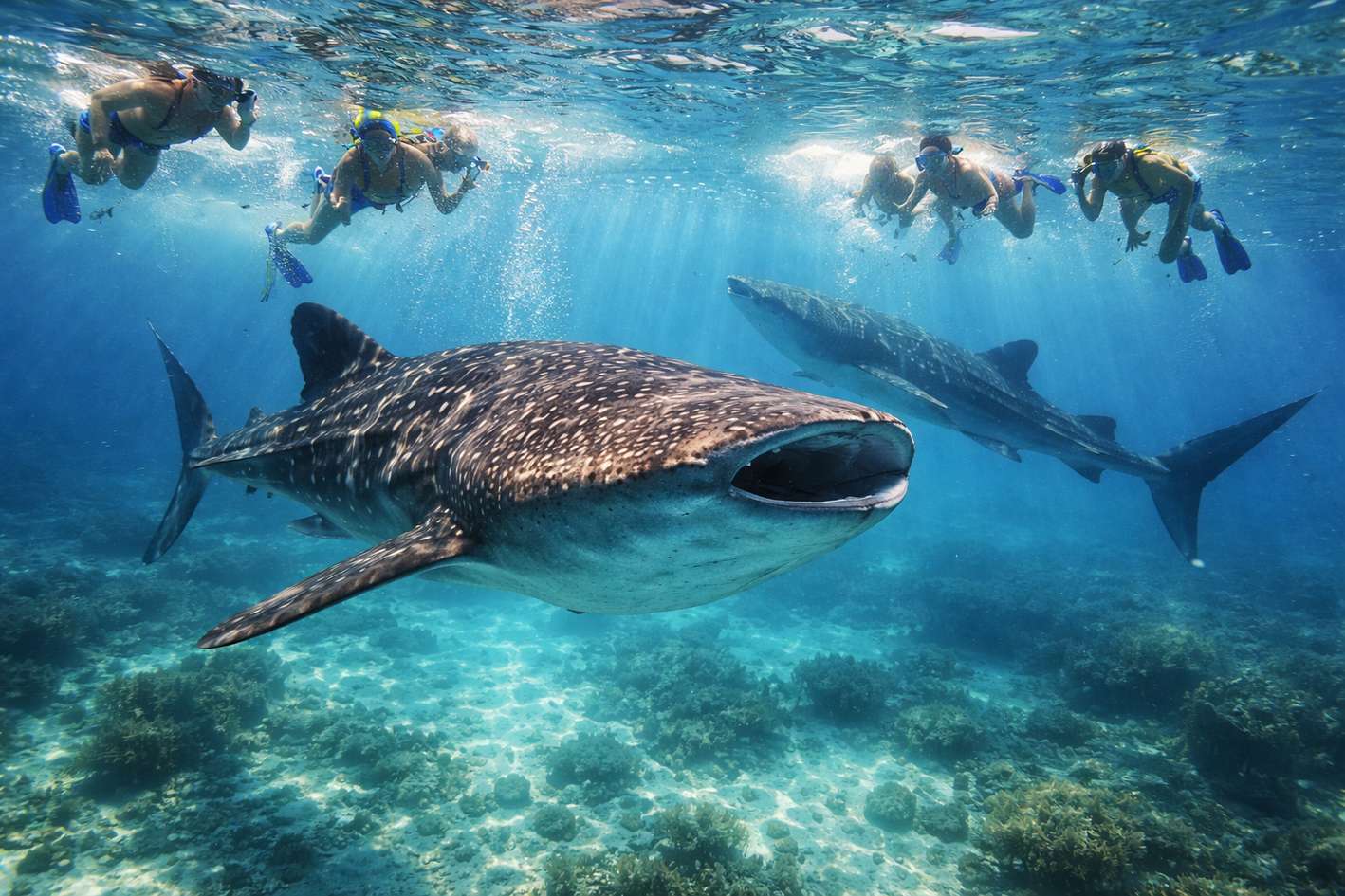
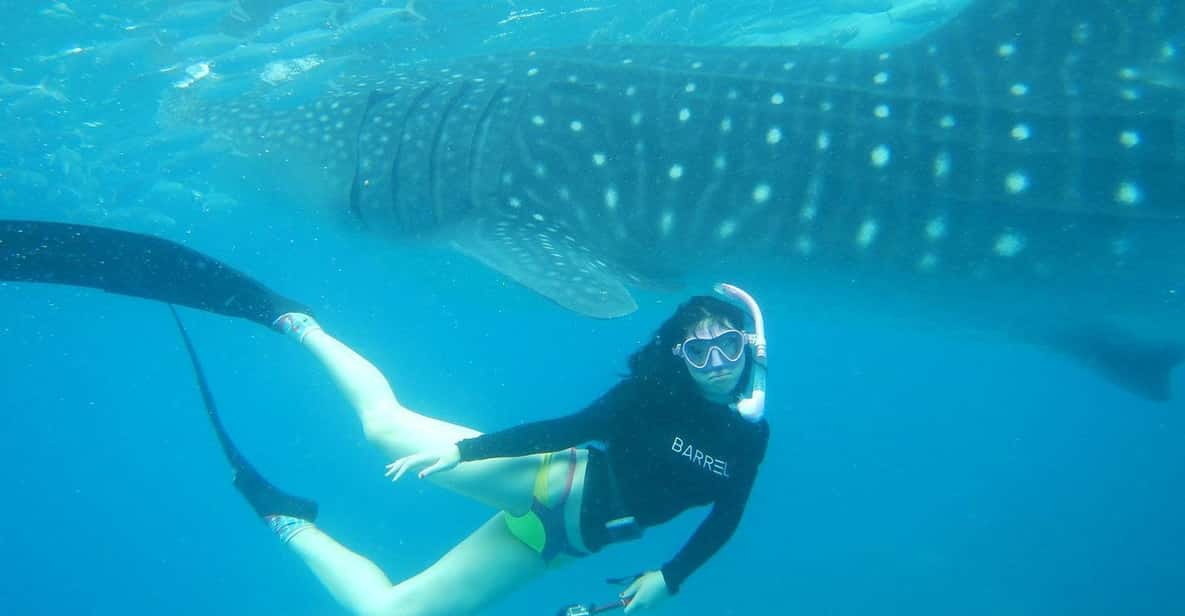
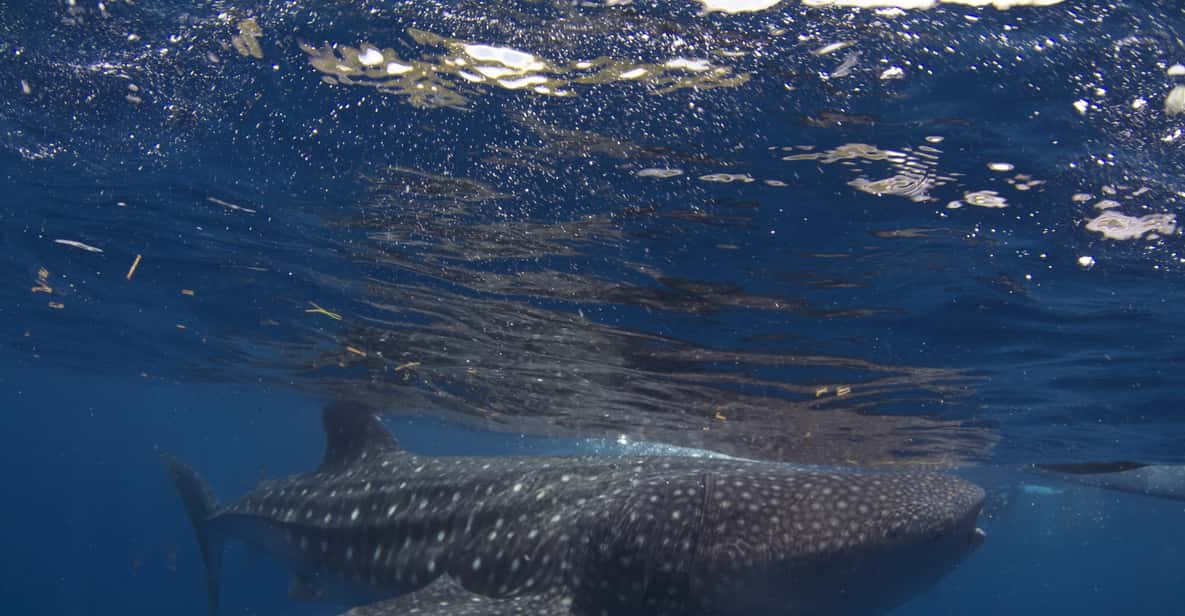
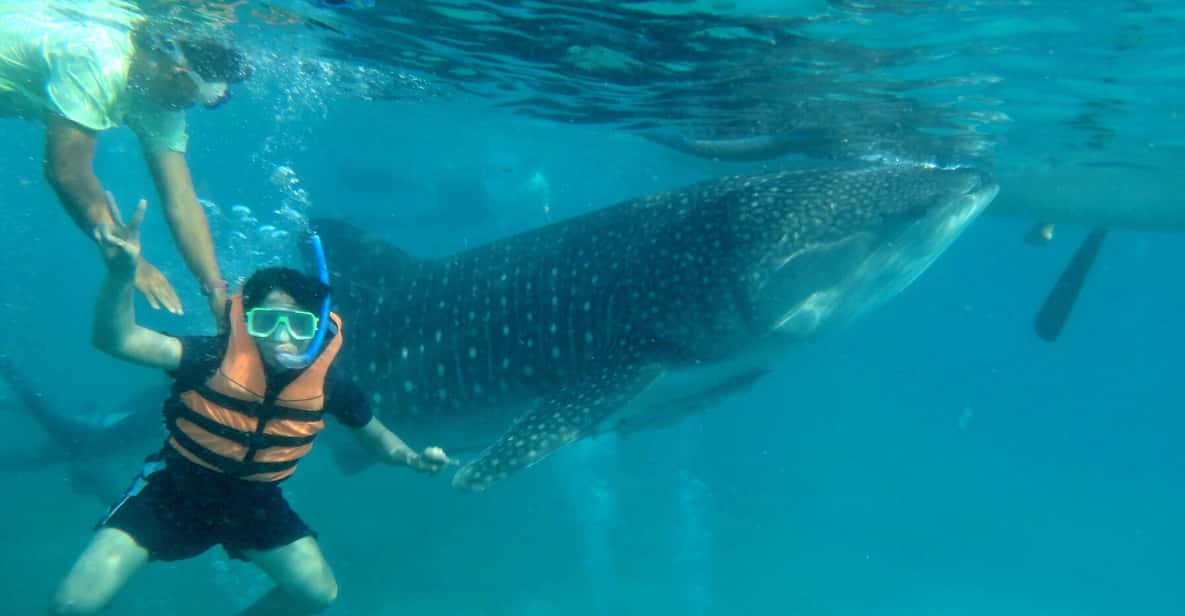
Oslob's whale sharks sit about 75 km south, roughly two hours away, and tours link the two in one circuit, whale sharks first and the sardines afterward.
The Cebu: Oslob Whale Sharks, Waterfalls & Moalboal Sardines tour does exactly that, with hotel pickup from Cebu City or Mactan in the small hours, a whale shark swim at Oslob, Tumalog Falls, and the sardines and turtles at Panagsama before the drive home.
Expect a long day and a return to your hotel between roughly 4:00 and 6 pm.
The two encounters differ in kind. The sardine run happens with no feeding or baiting at all, an entirely natural gathering, while Oslob's sharks are drawn in by daily feeding, which is why many travelers treat the sardines as the more natural swim of the two.
Either way, budget realistic hours: distances on Cebu that look short on a map routinely eat most of a day.
How do you photograph millions of sardines?
Light does half the work. Between 6:00 and 8 am the low sun filters through the school, lighting the bait ball from above, and the angled light between 4:00 and 5 pm gives the second-best frames of the day.
Both windows line up with the quiet-water hours, so the photography schedule and the crowd schedule agree.
The gear question is more honest. Travelers who have shot the run say a GoPro tends to render the sardines as shapes, especially the fish farther out in darker water, while a dedicated underwater camera picks up far more detail.
Serious rigs use an 8 to 15 mm fisheye lens behind a glass dome port for the school and turtles, and a 105 mm lens with a macro conversion lens for the small stuff close up.
Wide-angle shooters set continuous autofocus to AF-C, then switch to a small focus square on the subject's face for macro work.
If carrying all that sounds like a job, take the simpler deal: go at dawn with whatever camera you have, and let the encounter carry the memory. Plenty of visitors say the swim beat any photo they brought home.
Worth it, in the right window
The sardines are a year-round certainty waiting on one variable: clear, quiet water. Book into the November-to-May dry season when you can, put yourself at the drop-off by 7 am, and give the trip a spare day. Do that and the reef does the rest.
Even a wet-season visit works if you go early and stay flexible about visibility.
Best time to see the sardine run - your questions answered
empty reef at 6:30 am, crowds by 7:45 am
The short answers to the questions travelers ask most about timing a sardine run trip to Moalboal.
 Ginatilan2026
Are the sardines in Moalboal there all year?
Yes. The school lives off Panagsama Beach year-round instead of migrating with the seasons. It has temporarily disappeared before, so no visit comes with a guarantee, but most days the sardines are exactly where you expect them.
What are the best months for clear water?
November to May gives you the best chance of clear water, and January to April is the peak-visibility window. March and April are the months people single out for the clearest views of the bait ball.
What time of day should I swim with the sardines?
Go between 6 am and 9 am. The water is calmest, the tour groups are thinnest, and the sardines feed near the surface. If mornings are not an option, late afternoon around 3 pm to 4 pm is a quieter backup, though early morning remains the stronger choice.
How early do I need to arrive to beat the crowds?
Aim for 6 am to 7 am. One visitor found the drop-off nearly empty at 6:30 am, with crowds arriving by 7:45 am. Boats pass through the snorkeling area at any hour, so stay alert either way.
Is the sardine run worth doing in the rainy months from July to October?
It can be, if you stay flexible. The sea averages calm conditions through these months, and July to September bring about 11 to 12 dry days a month. October averages fewer. Expect changeable visibility, and know that unsafe weather can suspend a water activity.
Do the monsoons make the sea rough at Panagsama Beach?
Less than you might expect. The Amihan monsoon runs from November to May and the Habagat from June to October, but measured wave conditions change little between them. Every month had waves under 1.5 m on all days, with average highs between 0.1 and 0.5 m.
When am I most likely to see sea turtles feeding?
Between 6 am and 9 am, near the sardine area, is the strongest window for feeding turtles. Late afternoon can also work. Midday is the least favorable stretch of the day.
What time of day is best for underwater photos?
Between 6 am and 8 am, the low sun filters light through the school, which shows off its full shape. Between 4 pm and 5 pm, angled sunlight gives you a more dramatic look.
Does low tide make it harder to get in the water?
At low tide the water recedes enough to walk across the shallow reef toward the drop-off, which sits about 50 metres from the high-tide line. At higher water, getting in and out over the reef is easier.
Is the water warm all year?
Yes, with only mild fluctuation. Temperatures dip to annual lows of 26.6 to 27.1 degrees Celsius in February and peak between 29.3 and 29.6 degrees from June to October.
How many days should I stay in Moalboal?
Two full days is the practical minimum: one for the sardines and turtles, a second for a Pescador Island boat trip or Kawasan Falls. Three to four days lets you add diving or an inland day trip and gives you room if weather disrupts a plan.
Can I combine the sardine run with other sights in one day from Cebu City?
Yes, on an organized day tour. The drive to Panagsama Beach covers about 91 km and takes around 3 hours without traffic, so tours pick up from Cebu City hotels between 2 am and 3 am.
One 10-hour option pairs the sardines with the Oslob whale sharks and Tumalog Falls, returning to your hotel around 4 pm to 6 pm.
Pick the best time of year for Moalboal's sardine run
in the water by 7 am beats the crowds
Swim the sardine run, then meet whale sharks and Tumalog Falls in one timed day, with free cancellation up to 24 hours before and pickup included.