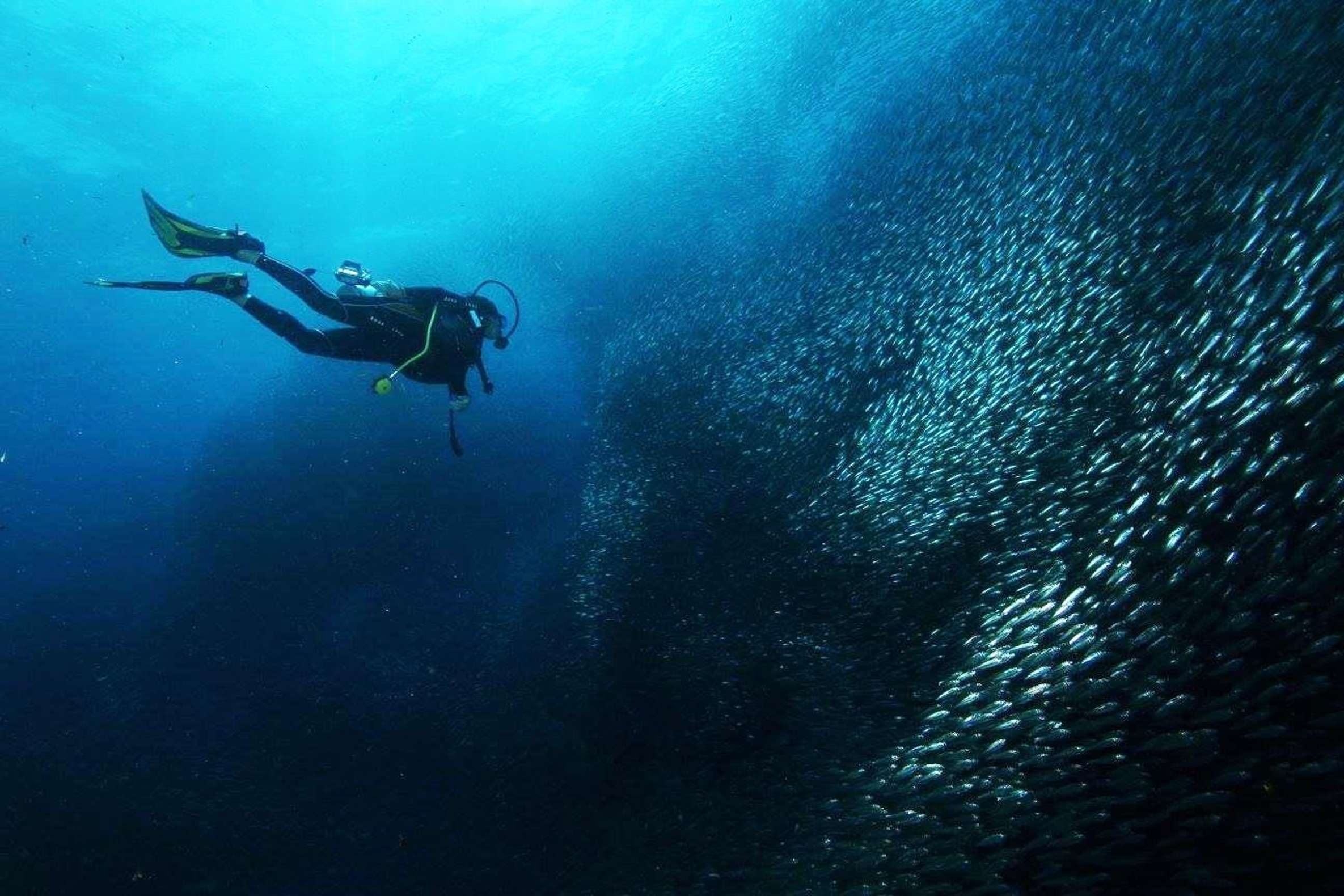
Moalboal Sardine Run Tour - Snorkeling, Scuba and Turtle Watching
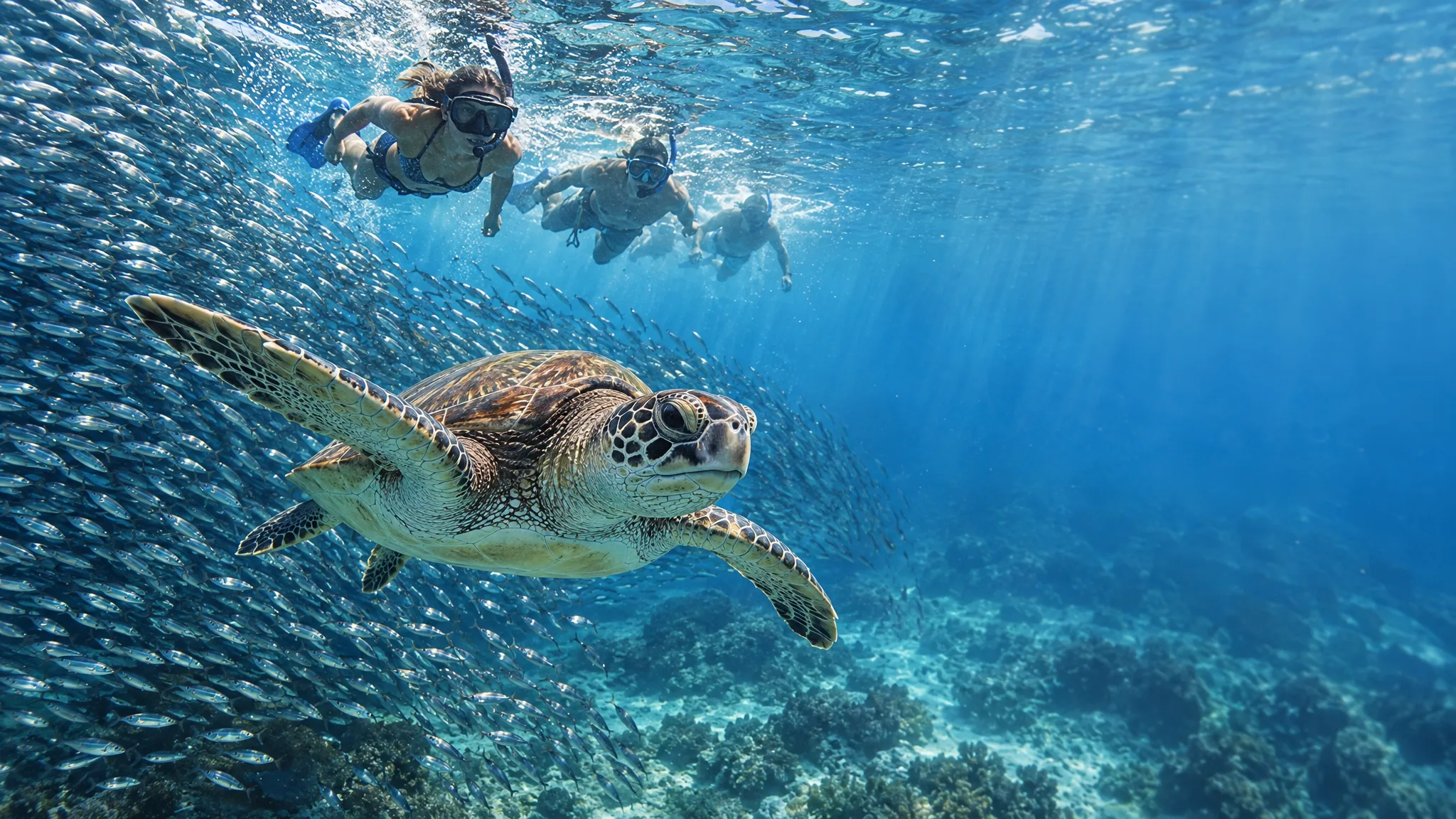
Swim into millions of sardines, straight from the shore. No boat, no waiting. Then meet the turtles and see Oslob whale sharks and Tumalog Falls in one guided day. Join the tour that puts the whole South Cebu coast together, and book your spot today.
Seeing the sardines comes two ways. You can swim out from Panagsama Beach on your own, or let a guided day tour handle the driving, gear and schedule from Cebu City. The difference comes down to pace: independent snorkeling lets you linger, while a combo tour folds the sardines into a full day with whale sharks and waterfalls.
GuidesSince around August 2025, Moalboal requires a registered local guide to snorkel out to the sardine baitball off Panagsama Beach, so use an accredited guide holding a valid local permit.
Environmental feeYou pay an Environmental Users Fee to snorkel in Moalboal's seawater, and only deputized staff from the Municipal Treasurer's Office can collect it, never your guide.
Life vestMunicipal rules require a life vest for snorkeling, and each guide leads no more than two people, which keeps non-swimmers well supported.
No touchingAn ordinance prohibits touching any marine life in Moalboal's waters, and violations carry a penalty of at least 2,500 pesos.
TimingAim for 6:00 to 9 am at Panagsama Beach, when the water is calmer and tour groups are fewer.
WeatherUnstable seas can suspend boat trips, though shore snorkeling with the sardines has stayed open during such suspensions.
What to bringSwimwear, a towel, a change of clothes and reef-safe sunscreen; life jackets are provided on guided tours.
CashFees, tricycles and small eateries around Panagsama Beach take cash only, so carry pesos.
BookingThe shared tour picks you up at your hotel between 2:00 and 3 am, with driver details emailed the day before.
Pescador IslandBoat trips there can be suspended in bad weather, so build flexibility into a plans that include island hopping.
See Moalboal's sardine run on a guided day
early snorkel slots, 7-9 am, calmest water
Two ways to run the same circuit: whale sharks in Oslob, Tumalog Falls, then the sardines and turtles at Panagsama.
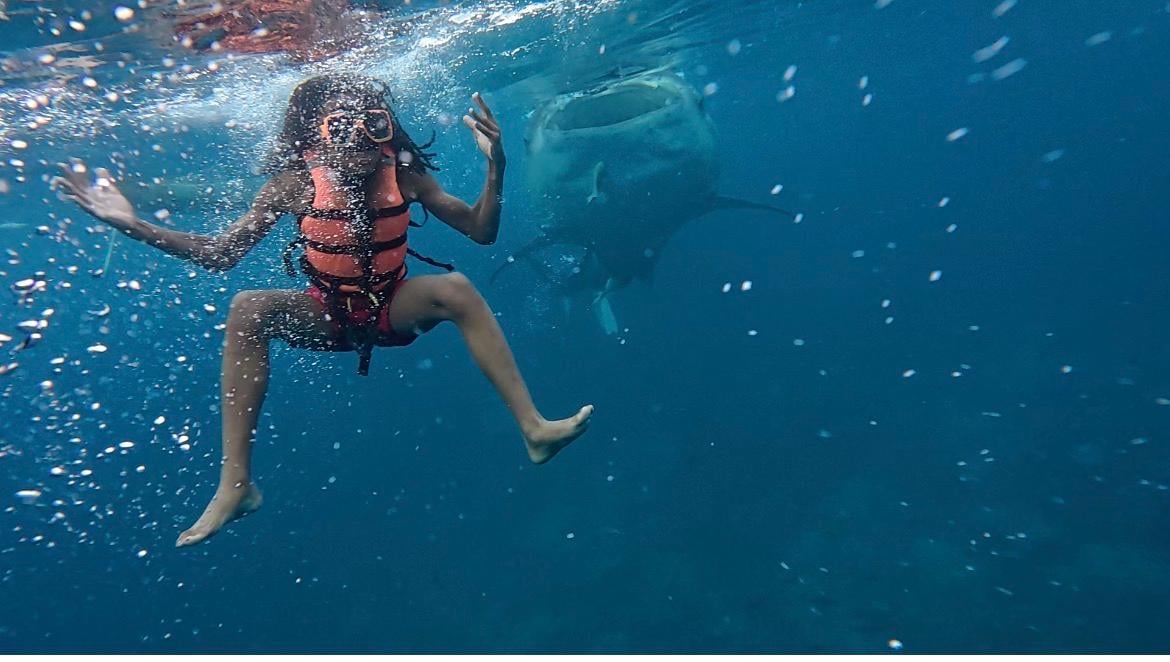
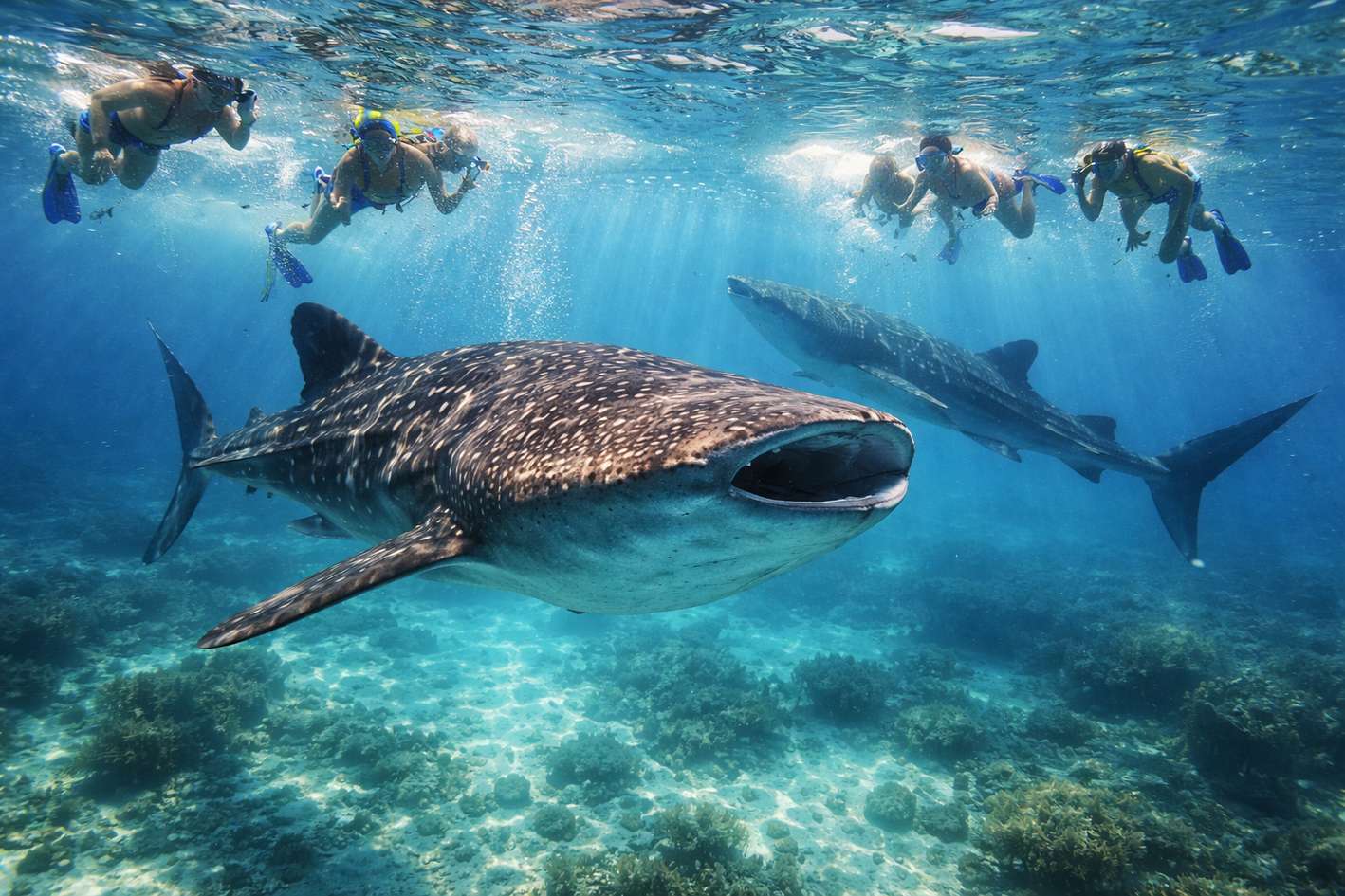
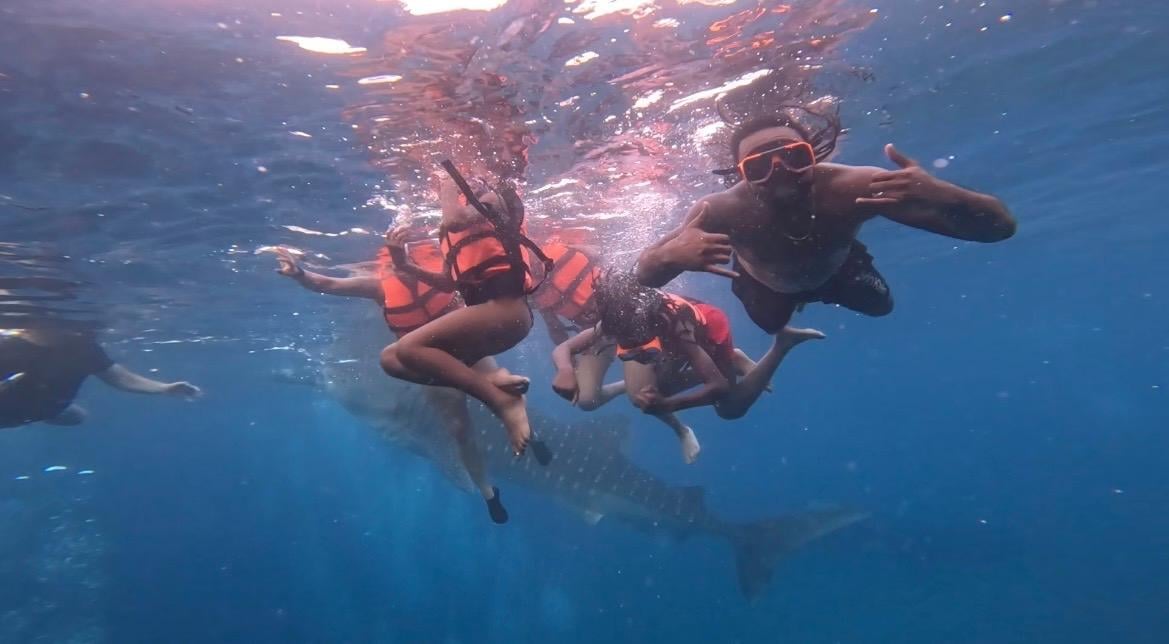
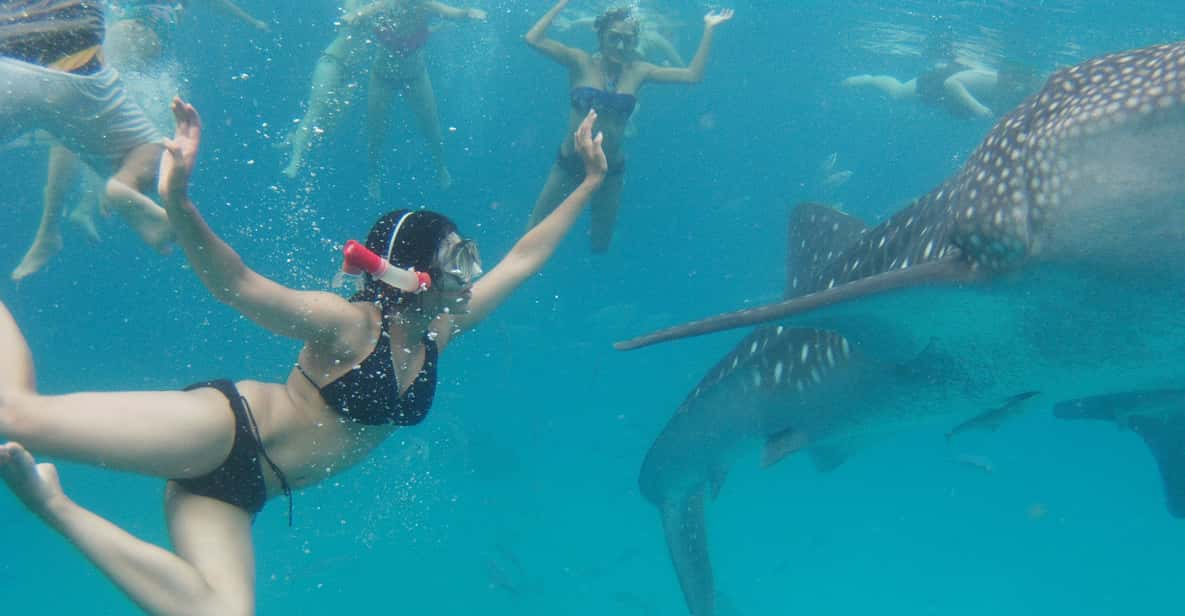
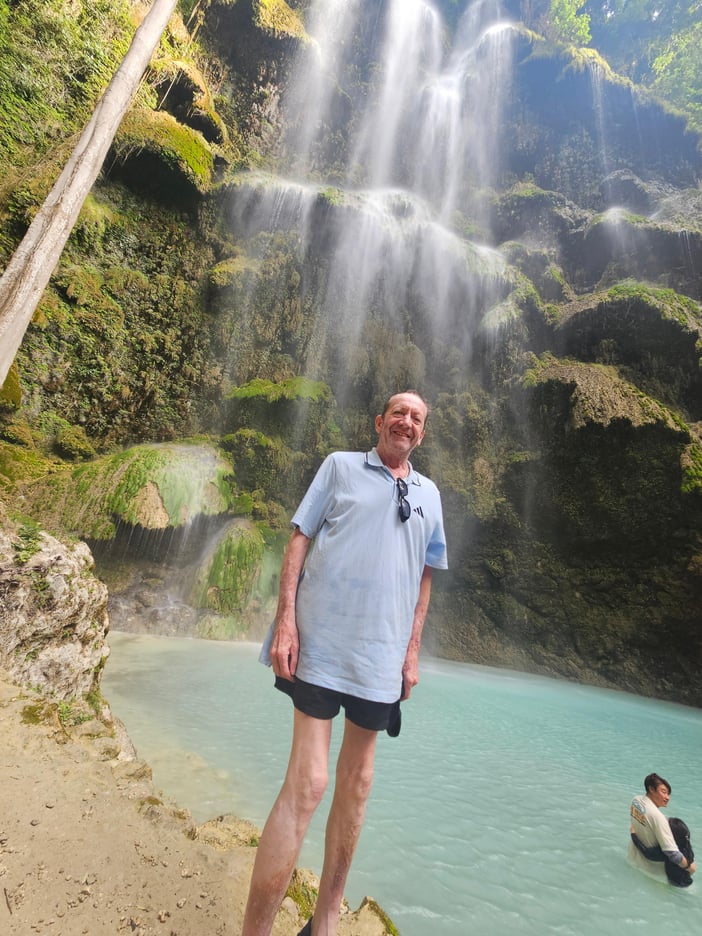
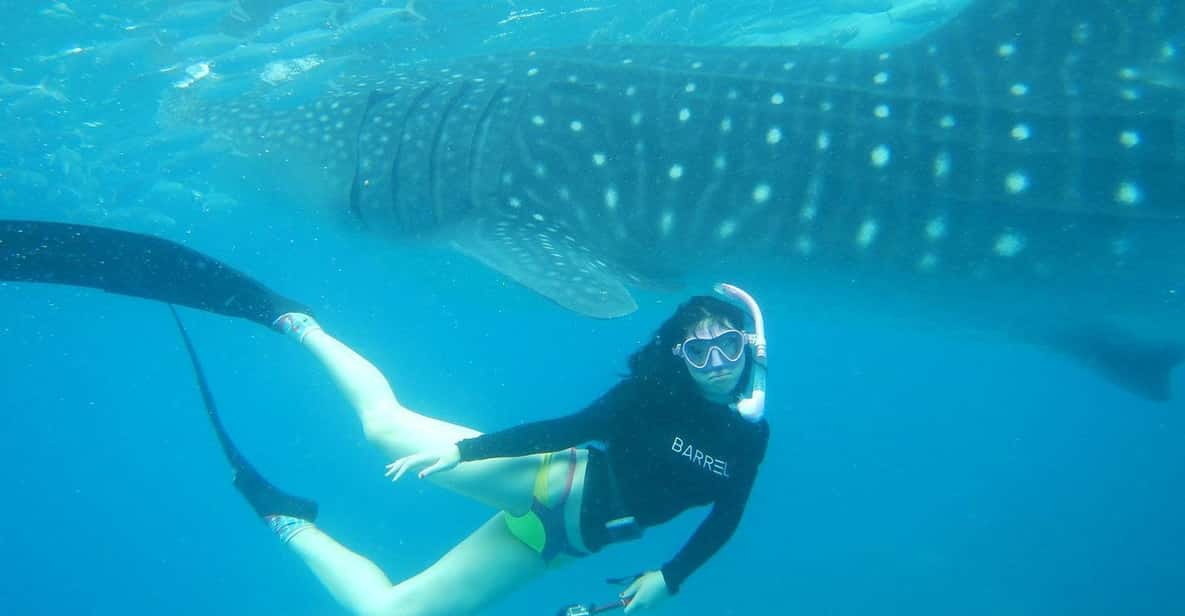
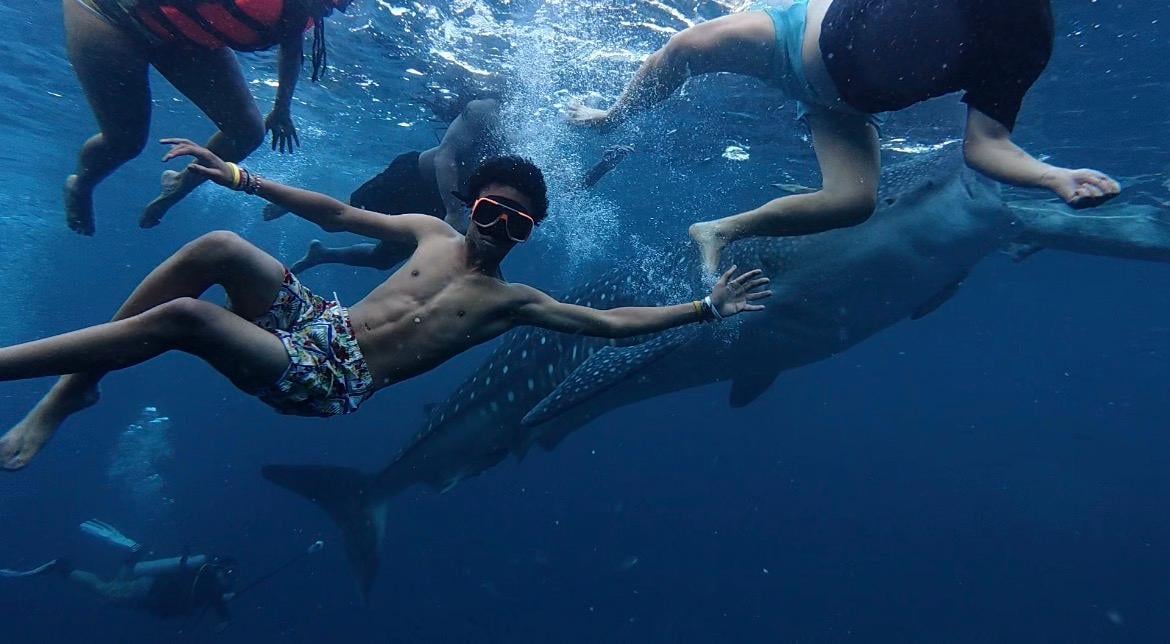
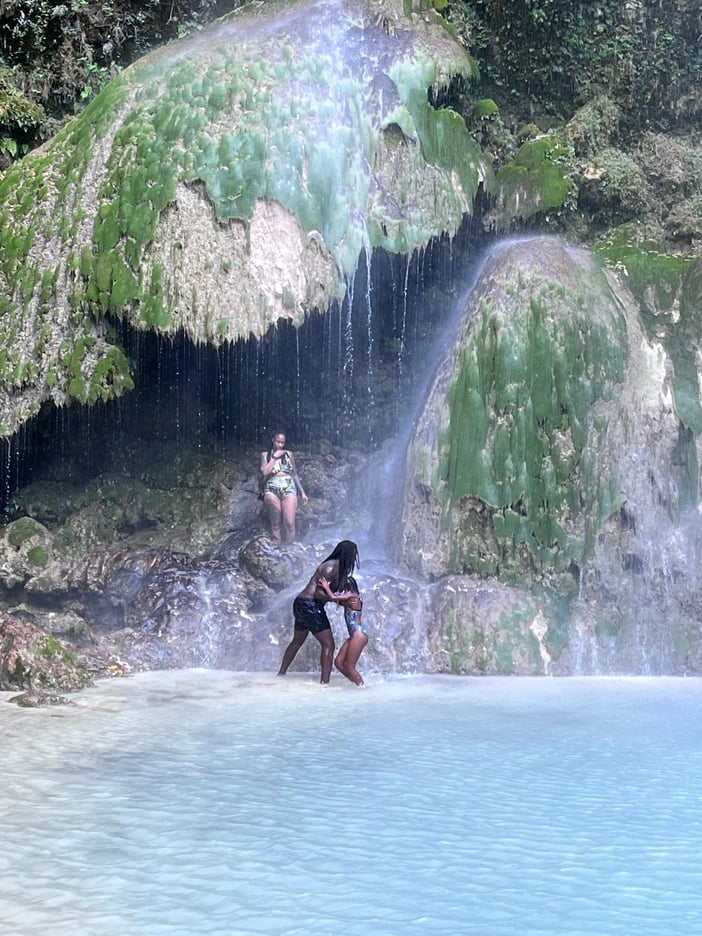
The first stop is Oslob, where you slip into the water beside a whale shark, the largest fish in the sea, after a short briefing on how to behave around it. From there the van runs down the coast to Tumalog Falls, a tall jungle cascade you walk in under for photos.
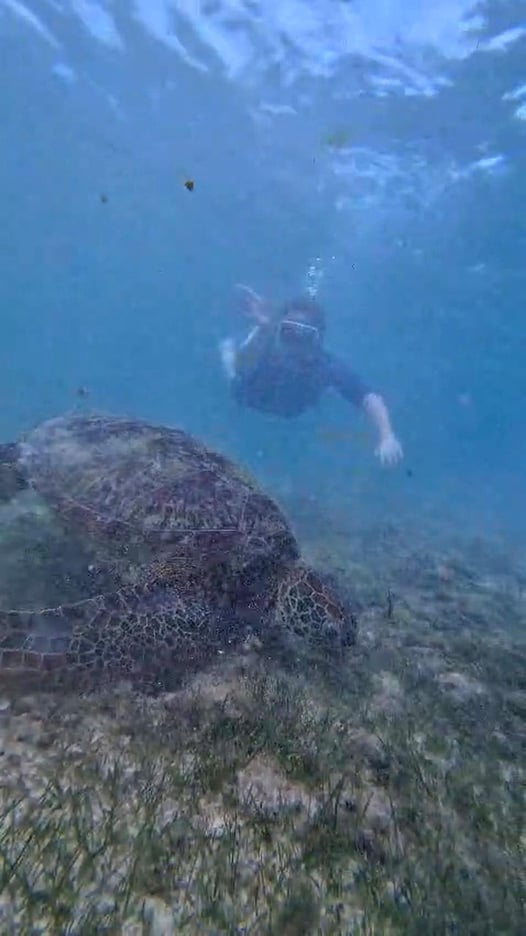
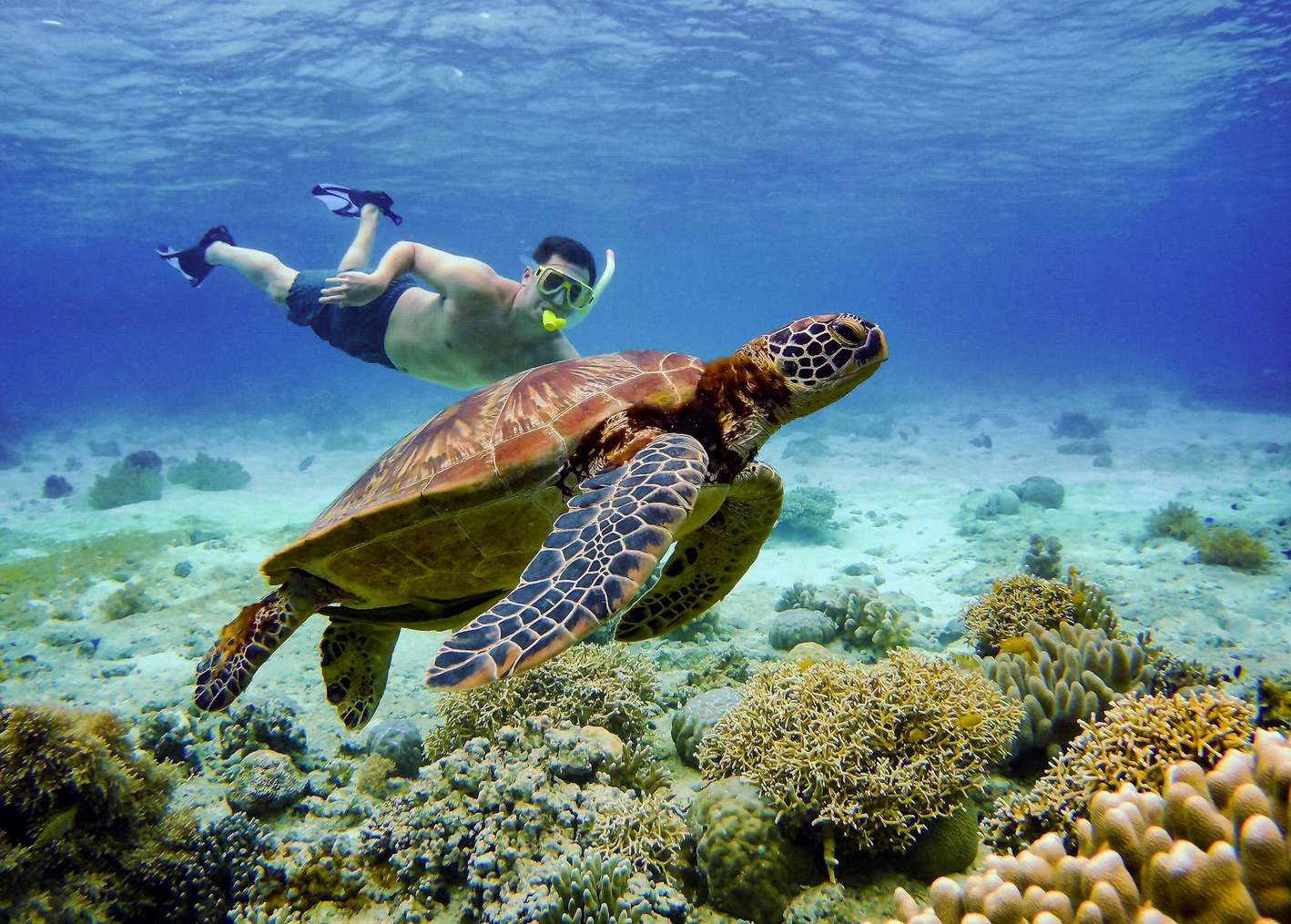
The day ends at Panagsama Beach in Moalboal, where you snorkel straight from the shore into the sardine bait ball and past the resident sea turtles that graze along the same reef wall.
Gear, life jacket, breakfast, lunch and all entrance fees are covered, and a driver handles the roads while you sleep or watch the coast go by. The stops below show the day in order.
Pickup19 places, depending on your optionFrom this tourStop 2Oslob· 60 minBreakfast (30 minutes)Street ViewStop 3Tumalog Falls· 30 minA short walk takes you under the misty cascades of this jungle waterfall for sightseeing and photos.Stop 4Moalboal· 60 minLunch (30 minutes)Street ViewDrop-off19 places, depending on your optionFrom this tour
Included
Hotel pickup and drop-off in the Cebu, Mactan, and Lapu-Lapu areas (shared tour option)Hotel pickup and drop-off in the Cebu, Mactan, Lapu-Lapu, Moalboal, Badian, and Oslob areas (private tour option only)Whale shark watching fee, Tumalog Falls fee, Moalboal entrance fee, all government feesSnorkeling gear (mask & life jacket)Filipino breakfast and lunchWhale shark swimming experience
cancellation is free up to 24 hours before, so book early
1. Pick your date first
Choose a date on the calendar and check availability. Shared and private options run on the same 10-hour itinerary, so the day's shape stays the same either way.
Pro tipMorning slots fill fast in peak season, so book at least a few days ahead rather than the night before
RecommendedCheck the typhoon months before you lock in a date, since heavy rain can force a reschedule
2. Choose shared or private
The shared option covers hotel pickup in Cebu City, Mactan and Lapu-Lapu. The private option also collects you in Moalboal, Badian or Oslob, and your group gets the car to itself.
Pro tipWith four or more people, the private option often works out cheaper per person than paying for several shared seats
Common mistakeFirst-timers pick shared without checking their hotel location, then learn on the day that pickup stops at the shared zones only
3. Watch for the pickup email
After payment you get a confirmation, and the day before the tour an email arrives with your exact pickup time and driver details. The shared option collects you at your hotel lobby between 2 am and 3 am.
ImportantThe exact pickup window comes by email the day before, so check your inbox and spam folder that evening
Common mistakeGoing to bed without confirming the pickup time, then missing a 2 am lobby start
4. Keep your voucher ready
Save the voucher on your phone and have your ID handy. The driver meets you at your hotel lobby, and you ride an air-conditioned van straight down the coast toward Oslob.
Pro tipSleep early the night before, since the 2 am to 3 am pickup is the hardest part of the whole day
RecommendedPack swimwear, a towel and a change of clothes in one bag so the van stops stay quick
5. Know the day's rules
Bring cash for extras like a GoPro rental, which is an add-on you choose rather than something the van carries by default. Plan for a hotel return around 4 pm to 6 pm depending on traffic.
ImportantA camera rental is an add-on you arrange in advance, not something the van carries by default
RecommendedExpect a 2 to 3 hour wait for the whale shark swim in peak season, and use it to rest before the sardines at Panagsama
Most reviewers praise the driver who picked them up before dawn, kept the long day moving and got them home safely.
Best surprise
Many travelers did not expect the sea turtles at Panagsama and came home calling that swim the highlight of the day.
Most common wish
Several reviewers wished someone had told them what to bring at each stop, from water shoes to a towel.
Whale Sharks, Waterfalls and the Moalboal sardine run in one day
pickup between 2 and 3 am, emailed the day before
One long day stacks three of south Cebu's marine highlights into a single trip: whale sharks in Oslob at dawn, Tumalog Falls late morning, then the sardine run and sea turtles off Panagsama Beach in the afternoon. Snorkeling gear, life jacket, fees, breakfast and lunch are all handled for you.
It suits travelers on a tight Cebu City itinerary who want the sardines without organizing three separate journeys, since a shared van and driver cover the whole route.
Three stops, ten hoursThe itinerary moves from Oslob's whale sharks to Tumalog Falls and finishes snorkeling the sardine bait ball and turtles at Panagsama.
Trusted and fully coveredA 4.3 rating from 560 reviews, and the price includes entrance fees, snorkeling gear, breakfast and lunch.
Worry-free planningLife jackets and guides help nervous swimmers, and you can cancel up to 24 hours ahead for a full refund.
Free cancellation up to 24 hours before the tour lets you hold a date now and decide later.
What to know before you book your sardine run swim in Moalboal
sardines sit 20 to 30 m off the beach
Can stop the dayGood to knowGood news
01
ChoosingWhat it is, who it suits, when to go
4
Shared or private
You choose between two ways to run the same 10-hour day. The shared option covers pickup only in Cebu City, Mactan and Lapu-Lapu. The private option also collects from Moalboal, Badian and Oslob hotels, and your group has the vehicle to itself.
What is included
The combo tour bundles the practical parts of the day: mask and life jacket, the whale shark, Tumalog Falls and Moalboal entrance fees, breakfast and lunch, and hotel pickup. Underwater camera rental and gratuities cost extra.
Best time to swim
Aim for 6:00 to 9 am at Panagsama Beach for calmer water and fewer tour groups. Late afternoon works as a quieter backup, and the sardines stay on the reef year-round, so no season rules the swim out.
Gear rental
On the combo tour the mask and life jacket are included, so you need nothing. Swimming Panagsama on your own, you can rent snorkel gear from the shops and dive shops along the road; ask at a few places to compare rates, since stalls open from 7 am.
02
BookingHow far ahead, and what happens if plans change
1
Cancellation
Cancel up to 24 hours in advance for a full refund. Weather can also force a rescheduling, and in that case you can move the date or take the refund instead.
03
Before you goPapers, health, what to bring
4
Life vest ruleCan stop the day
Moalboal's municipal ordinance requires every snorkeler to wear a life vest in the water, and each guide may lead no more than two people. The tour provides life jackets, and shore swimmers without a guide still need a flotation vest on.
Shore guides
Since around August 2025, Moalboal requires a registered local guide to snorkel out to the baitball off Panagsama Beach, so transact only with guides holding a valid municipal permit. Shore entry itself is easy: the drop-off sits 20 to 30 meters out, about a minute's swim.
What to bring
Pack these for the day: swimwear, a towel, a change of clothes, reef-safe sunscreen and a waterproof pouch for your phone and valuables. Bring peso cash too, because beach fees, tricycles and small eateries around Panagsama take cash only.
Health limits
The combo tour is not suitable for pregnant women or people with back problems, which rules the booking out before you pay. The 2 am start makes it a long day for small children as well, so plan the family version around that.
04
On the dayWhere to be, when, and how you get there
1
Pickup
The shared combo tour collects you at your hotel lobby between 2:00 and 3 am, and the day before the tour you get an email with your driver and exact pickup time. Return to your hotel lands around 4:00 to 6 pm, depending on traffic into Cebu City.
05
During the tourWhat is expected of you
2
Touching marine lifeCan stop the day
A local ordinance prohibits touching any marine life in Moalboal's waters, and breaking the snorkeling rules carries a penalty of at least 2,500 pesos. Fishing and taking anything from the water are banned too. Keep your hands to yourself and enjoy the show.
Photos
GoPro shots of the baitball can show limited detail, especially from a distance, and travelers say a dedicated underwater camera captures the school better. Renting a GoPro is available as an add-on on the tour, and guides often take photos for you.
The sardine run of Moalboal - a guide to the swim
tuna hunt the baitball's edges
Millions of sardines hold a silver wall off Panagsama Beach, twenty meters from shore, all year. What is still open is the rest of the story: which stretch of coast, which hour, and whether the haul across Cebu earns its keep.
If you only remember three things
1
Swim out between 6 and 9 am for calm water before the boats arrive.
2
The sardines sit just 20 to 30 meters off Panagsama Beach, no boat needed.
3
Plan on 45 minutes to an hour in the water, turtles included on the way back.
What the sardine run in Moalboal is
The video that made you search is real, and it happens every day. Just off Panagsama Beach, millions of sardines swim together as one body, a living wall that thickens, splits and reforms over the reef. People call it the sardine run; locals know it as a resident baitball.
The school is here year-round. Unlike South Africa's famous run, an annual migration that comes and goes with the southern winter, the Moalboal school simply lives on this reef.
No one knows exactly why they first gathered here, but a steep drop-off, plankton-rich currents and few large predators keep them, and mass fishing is banned in the protected area.
The fish bunch into a dense ball as defense against predators, which is what gives you the spectacle. Some beliefs about the place deserve retiring before you plan anything.
Myth vs reality
MythSardine run myths, set straight
Reality
what is actually true
MythThe run is a seasonal migration like South Africa's
Reality
The Moalboal school is resident and stays on the reef year-round; you never chase it
MythYou need a boat or a dive certification
Reality
Snorkelers reach the baitball from the shore; scuba is optional
MythSeeing them depends on luck of the season
Reality
The school is an almost permanent feature, found at the reef nearly every day of the year
None of these change your packing much: the school waits on the reef, and a rented mask is all the qualification you need.
The sardines hold along the reef at Panagsama Beach, on Moalboal's southwest coast. That matters more than it sounds.
Moalboal has two beach areas, and they sit far apart: Panagsama, a rocky strip of dive shops and restaurants where the sardines are, and White Beach (Basdaku) further north, the wide sandy stretch built for sunbathing. Book the wrong one and every swim starts with a ride back.
Along the Panagsama reef, the school's most reliable spot is near the yellow pier in front of Marina Village Dive Resort. Its position shifts along the wall from time to time, so ask anyone on the beach that morning; the answer changes less often than you would think.
Turtles graze the same wall, which is part of why one beach can fill a whole morning. Get the map in your head before you go and there is no chance of arriving at the wrong stretch of coast.
Is the sardine run in Moalboal worth it
Honest answer: yes, with one condition. The spectacle itself is the easy part. A massive school of silver fish, twenty meters from shore, present nearly every day, viewable with a mask you rent for the afternoon. Travelers describe the shore snorkeling as awesome, and the sardines often turn out more impressive than expected.
The condition is the setting. Panagsama is not a relaxing beach. The strip is rocky with little sand, the shallow corals are largely dead, and daytime brings crowded water and boat traffic. You come for the reef; the beach day belongs to White Beach.
The other question is the drive. Moalboal sits about 90 km from Cebu City, roughly three hours each way. If you enjoy swimming or snorkeling at all, people who have made the trip say it pays for itself. If you never get in the water, the journey is harder to justify.
Travelers put it better than a guide ever could.
A traveler's note
Big shoutout to driver Reynaldo, punctual, explained everything, safe driver, showed us rural Cebu. Private tour, ~30 mins per spot. Bring a GoPro or rent cheap. Wonderful time!
That is the pattern running through every report of this place: the swim itself carries the whole day.
What it looks like underwater
The reef explains the picture. A shallow coral garden runs out from the beach at two to five meters deep, then breaks into a wall that plunges, in places, to 70 meters. The sardines hold along that edge, mostly between the surface and 20 meters, close enough to see clearly from a snorkel.
The depth is what makes the image. Silver against dark blue water and a looming wall is a contrast no aquarium prepares you for, and it is why the photos look the way they do.
Watch the ball's edges and you may see why the fish bunch up: tuna and mackerel hunt the school along the drop-off, darting in and forcing the mass to fold. A few things first-timers only learn on site.
What nobody tells you
The baitball's position shifts along the reef
Check near the yellow pier that morning instead of assuming yesterday's spot
No one knows why the sardines first gathered here
The plankton-rich currents and the steep wall keep them, so count on the school and take each day's swim on its own terms
The silver-to-dark contrast is the whole photograph
Shoot toward the deep blue, not along the shallow reef, and the school pops
Read that second line twice. The school is the steadiest part of your plan; the exact spot along the wall is the part that moves.
Will you really swim with sea turtles
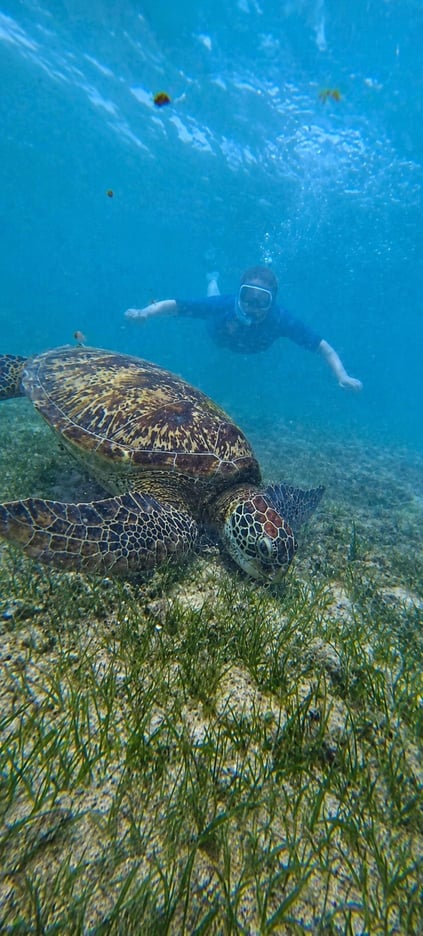
Turtles are the second animal on nearly everyone's list, and Panagsama delivers. Resident green and hawksbill turtles graze the same reef wall as the sardines, ten to fifty meters from shore, all year.
The numbers are unusually generous. Snorkelers spot turtles on around nine in ten sessions, most seeing two to five per swim, and many meet their first within five minutes of getting in.
The morning feed between 7 and 9 am is the reliable window, when sightings come at a depth of 6 to 8 meters on the drop-off's edge.
The largest resident turtle typically holds a section of wall about 30 meters north of the main sardine entry point, and more graze daily at Tongo Point, a few minutes' swim further north.
Sea turtle encounters off Panagsama Beach
90%estimated sighting rate
2 to 5turtles seen per session
10 to 50 mdistance offshore to find turtles
5 mintypical swim to spot one
One rule protects the encounter. Keep two meters from any turtle, no touching, and remember four is the limit of people allowed in the water around a single animal during a dedicated interaction.
When to plan your Moalboal trip
Start with the easy part: the sardines run every month of the year, and the sea stays warm in all of them. Water bottoms out around 27 degrees in February, the coolest month, and peaks near 29.5 from June to October. You will never need anything thicker than a rash guard or shorty, if that.
Weather is the real variable. July to October is the Philippines' peak typhoon season, and for direct hits on Central Visayas the riskiest window runs November and December.
The sea itself averages calm through the rainy months, so a flexible traveler does fine: July to September bring about 11 to 12 dry days a month, October only around 6. Unsafe weather can suspend a water activity, and sightings on any single swim are never guaranteed.
Rain and sea conditions by month
July: 12.4 dry days. Expect about 12 dry days and calm sea on average, though rain remains common.
HighestJul to Sep11.2 to 12.4 days
In betweenMar to May, Oct5.4 to 7.8 days
LowestJun, Nov to Feb0.8 to 4.2 days
Darker months: higher, from 0.8 to 12.4 days
Tap a month to read it.
January: calm sea on 100% of days. Expect about 3 dry days and calm sea on average, so rain is frequent.
Lowestall year100% of days
Darker months: higher, from 100 to 100% of days
Tap a month to read it.
The practical read: any month works if your schedule has a spare day. If you have exactly one, the drier months leave less to chance.
The best time of day to swim out
The window you want is 6 to 9 am. Water sits calmest then, and the tour groups have not yet arrived; late afternoon is the backup if you cannot face the alarm, quieter than midday but second best.
The whole encounter fits a short morning. Plan on about 45 minutes to an hour in the water, enough to swim with the sardines and look for turtles on the way back.
Gear works in your favor too: dive shops and snorkel rental stalls along Panagsama open from 7 am, and most run by 8, so an early arrival needs nothing booked ahead.
Early morning is the calmest, quietest window
Early morning Peak6 am to 9 am
Calmer water and fewer groups before boats arrive.
Midday10 am to 2 pm
More boat traffic and tour groups than early morning.
Late afternoon4 pm to 5 pm
A quieter backup, though early morning is best.
QuietBusyThe busiest
The same early hours carry the turtle feed, so the calmest water and the best wildlife land together. Late risers still see sardines; they just share the ball with more boats.
Shore snorkeling or a guided day tour
Two ways to do this, and both are legitimate. Walk into the water at Panagsama and you pay nothing, follow no schedule and stay as long as the reef holds you. Travelers confirm no boat hire and no advance booking are needed to see the sardines.
The tour earns its place when Cebu City is your base and the days are counted. Moalboal sits about 90 km away, two and a half to three hours each way, and a day that bundles the drive, the sardines and a second destination together removes every transfer decision.
One operator runs the Cebu: Oslob Whale Sharks, Waterfalls & Moalboal Sardines tour, ten hours linking whale sharks in Oslob, Tumalog Falls and the Panagsama sardines, with hotel pickup, gear, breakfast and lunch included.
Independent shore snorkeling
Guided combo day tour
Cost on the day
Free water access, gear rental only
One booking covers transport, fees, gear and meals
Flexibility
You set the pace and stay as long as you like
The itinerary sets the stops
Transport from Cebu City
Bus or private car, around three hours each way
Hotel pickup, driver arranged for you
How much is arranged
Everything: entries, tides, gear, timing
Transport and logistics handled; you show up with swimwear
Where it wins
Slow travelers based near Moalboal
Day-trippers from Cebu City on a tight schedule
Independent shore snorkeling
Cost on the day
Free water access, gear rental only
Flexibility
You set the pace and stay as long as you like
Transport from Cebu City
Bus or private car, around three hours each way
How much is arranged
Everything: entries, tides, gear, timing
Where it wins
Slow travelers based near Moalboal
Guided combo day tour
Cost on the day
One booking covers transport, fees, gear and meals
Flexibility
The itinerary sets the stops
Transport from Cebu City
Hotel pickup, driver arranged for you
How much is arranged
Transport and logistics handled; you show up with swimwear
Where it wins
Day-trippers from Cebu City on a tight schedule
The last row is the real decision. If you sleep in Moalboal, go independent. If you sleep in Cebu City, the van that picks you up and waits while you snorkel wins the arithmetic.
Count on roughly three hours from Cebu City, whichever way you go. A car does the 90 km run in just under three hours without traffic; the Ceres bus from Cebu South Bus Terminal takes about two and a half to three and a half hours, departing roughly every half hour through the day.
From Mactan-Cebu International Airport, no direct bus runs to Moalboal. Public transport means reaching Cebu South Bus Terminal inside the city first; a car, taxi or van transfer crosses the Cebu-Cordova Link Expressway and follows the coastal road south, three to four hours door to door.
The last leg applies to everyone arriving by bus. The Ceres coach stops on the national highway by the Jollibee across from the municipal hall, and Panagsama Beach sits about three kilometres downhill. A tricycle or habal-habal covers it in minutes.
Whichever line you pick, add slack for the drive home. Return runs toward Cebu City stretch to four or five hours in afternoon traffic.
Getting in the water at Panagsama
The entry is easier than the rocky shore suggests. Small beaches on the south side of the Chili Bar and on the south side of Verandah Kitchen give direct water access, and the walkway from Panagsama Road leads straight to the ocean.
From the seawall you cross the rock shelf and swim 20 to 30 meters to the drop-off, which takes under a minute.
Tide matters for the crossing. At high water the entry is easy; at low tide the reef goes shallow, though the receded water lets you walk toward the drop-off instead. Gear comes from the shops along the road, and it pays to ask at several and compare rates.
The rules of the water, briefly. Snorkeling requires a life vest, and since around August 2025 the municipality requires a registered local guide, limited to two guests each, for the swim out to the baitball.
Pay the environmental fee to deputized Municipal Treasurer staff, as guides may not collect it. Non-swimmers view the ball from the surface with a vest and a guide. And no touching marine life, an ordinance breach carrying a penalty of at least 2,500 pesos.
Reaching the sardine run from shore
20 to 30 mdistance to the reef drop-off
< 1 minswim time from the beach
Up to 70 mwater depth at the drop-off
Those three numbers are the whole approach: the reef is close, the swim is short, the water beneath the school is deep enough that you stay near the surface.
What to bring, and what if weather turns
Panagsama is a rock shelf with little sand, so pack for your feet: aqua shoes first. A rash guard earns its place for a reason you would not guess: box jellyfish have floated near the beach, and local authorities urge swimmers to wear one for the skin.
Bring pesos in cash, since tricycles, the environmental fee kiosk and nearly every food stall run on cash, and Moalboal's few ATMs run dry on weekends. A dry bag or a rented locker keeps valuables safe while you swim.
For photos, know the limits: a GoPro loses detail on a school this big, while a dedicated underwater camera or a fisheye setup captures the wall properly.
Weather days deserve a plan too. Heavy rain can downgrade conditions and suspend boat trips, and coast guard warnings have stopped Pescador Island runs while shore snorkeling stayed open.
If this happens
What happens then
When the weather turns
what happens
Rough seas or unsafe conditions close the water
Shore snorkeling has kept running during one such suspension, and tours reschedule
A tour cancels for bad weather
You choose a new date or a full refund
Heavy rain rolls in overnight
Conditions may be poorer than planned; the tour stays bookable another day
A washed-out morning, in other words, costs you a reschedule at worst. Book the water day early in your stay and the spare days absorb the weather.
What else to do around Moalboal
One swim turns into a stay faster than you expect. Organized tours pair the sardines with Kawasan Falls or canyoneering, with the whale sharks in Oslob, or with Mantayupan Falls, Inambakan Falls and Pescador Island hopping, where a boat circuit includes the sardine run as well.
Give the place two full days at minimum: one for the sardines and turtles, a second for Pescador Island or Kawasan. Three to four days is the comfortable length, leaving room for diving, an inland day and weather that misbehaves. Two days squeeze it all in, but it shows.
Where to sleep depends on what your evenings want. Panagsama puts the reef, dive schools and restaurants at walking distance, and stays loudest after dark. White Beach (Basdaku) gives calm, sandy, quiet nights, at the price of a ride back for every snorkel and dinner.
More to book around Ginatilan
Live dates and prices
Worth the haul, if you get in early
A resident school of millions, twenty meters from a beach you can walk into, any month of the year: the trip across Cebu pays. Go at dawn, wear the vest and rash guard, bring cash, and let the reef and the turtles do the rest.
Go ifYou swim, snorkel or dive at all, even as a beginnerYou have a day to spare from Cebu City or more from MoalboalYou want turtles and a baitball in one short session
Skip ifYour stay is very short and you never get in the waterYou want a sandy beach for sunbathing; White Beach is that trip
The questions travelers ask most about the sardine run, answered plainly.
Ginatilan2026
Ten million sardines turned the water silver right over the drop-off this morning. Go at 7 am, the sea is glass and you have it almost to yourself.
What is the Moalboal sardine run?
A resident school of millions of sardines that gathers just off the reef drop-off at Panagsama Beach. They move together in one swirling bait ball, and you can see them by snorkeling from the shore.
Where is the sardine run in Moalboal?
Along the reef at Panagsama Beach, on the southwest coast of Cebu. The sardines hold near the drop-off about 20 to 30 meters from shore, and their exact spot along the reef can shift a little.
Do you need a boat to see the sardines?
No. You walk into the water at Panagsama Beach and swim a short distance out to the reef edge. The school sits between the surface and about 20 meters deep, so a mask and snorkel are enough.
Is the sardine run in Moalboal worth it?
Travelers describe it as a memorable highlight, and the school stays year-round just 20 meters from shore. One thing to plan around: daytime brings crowds and boat traffic, and Panagsama is a rocky shore with little sand, so go for the water rather than for lounging on the beach.
Can non-swimmers see the sardines safely?
Yes, with a life vest and a guide. The school gathers a short swim from the beach in water that allows an easy retreat, and guides help nervous swimmers feel safe. If open water frightens you, watching from shore is a fair option too.
Do I need to book a guide in advance?
Travelers say you can walk in and see the sardines without booking ahead. Since around August 2025, the municipality has required a registered local guide for snorkeling out to the bait ball, and only guides with valid local permits may take you, so arrange one on the beach through an accredited stall.
What time of day is best for the sardine run?
Aim for 6 to 9 am, when the water is calmer and fewer tour groups are in the water. Late afternoon works as a quieter backup, though early morning gives the better conditions.
Will I see sea turtles too?
Very likely. Green and hawksbill turtles graze along the same reef wall, and most snorkelers report spotting two to five per session, often within the first few minutes in the water.
Is the sardine run year-round?
Yes. Unlike South Africa's seasonal migration, the Moalboal school is resident and stays along the reef virtually every day of the year. A steep drop-off, plankton-rich currents and a ban on net fishing in the area help keep it there.
Do I need to scuba dive to see the sardines?
Snorkeling alone gives you the full experience, since the bait ball sits in shallow water you can view from the surface. Diving is an enjoyable extra for those who want to see the wall and the tuna and mackerel hunting below.
Should I worry about jellyfish at Panagsama Beach?
Box jellyfish have been spotted near the beach at times, and local authorities encourage swimmers to wear rash guards for skin protection. If snorkeling is ever suspended after a sighting, shore entry is closed until it is safe again.
Should you worry about jellyfish at Panagsama Beach?
Box jellyfish have shown up near the beach at times, causing itchy red marks. Local authorities suggest wearing a rash guard, which covers you and helps with sun protection anyway.
Whale Sharks, Waterfalls and the sardine run in one day
snorkel gear and life jacket included
Pick up from your hotel in Cebu City, snorkel with whale sharks, the sardines and turtles, and swim at Tumalog Falls, with free cancellation up to 24 hours before.